
EPOXY FLOORING IN CLINTON, MO
Tired of Stained, Worn or Unfinished Concrete?
Worn, uncoated concrete degrades the character of a space — and staying that way is not the only option.
Durable floor coatings for garages, basements, commercial spaces and industrial floors in Clinton, MO, chosen around the condition of your slab and the way the space is used.
Talk through your project
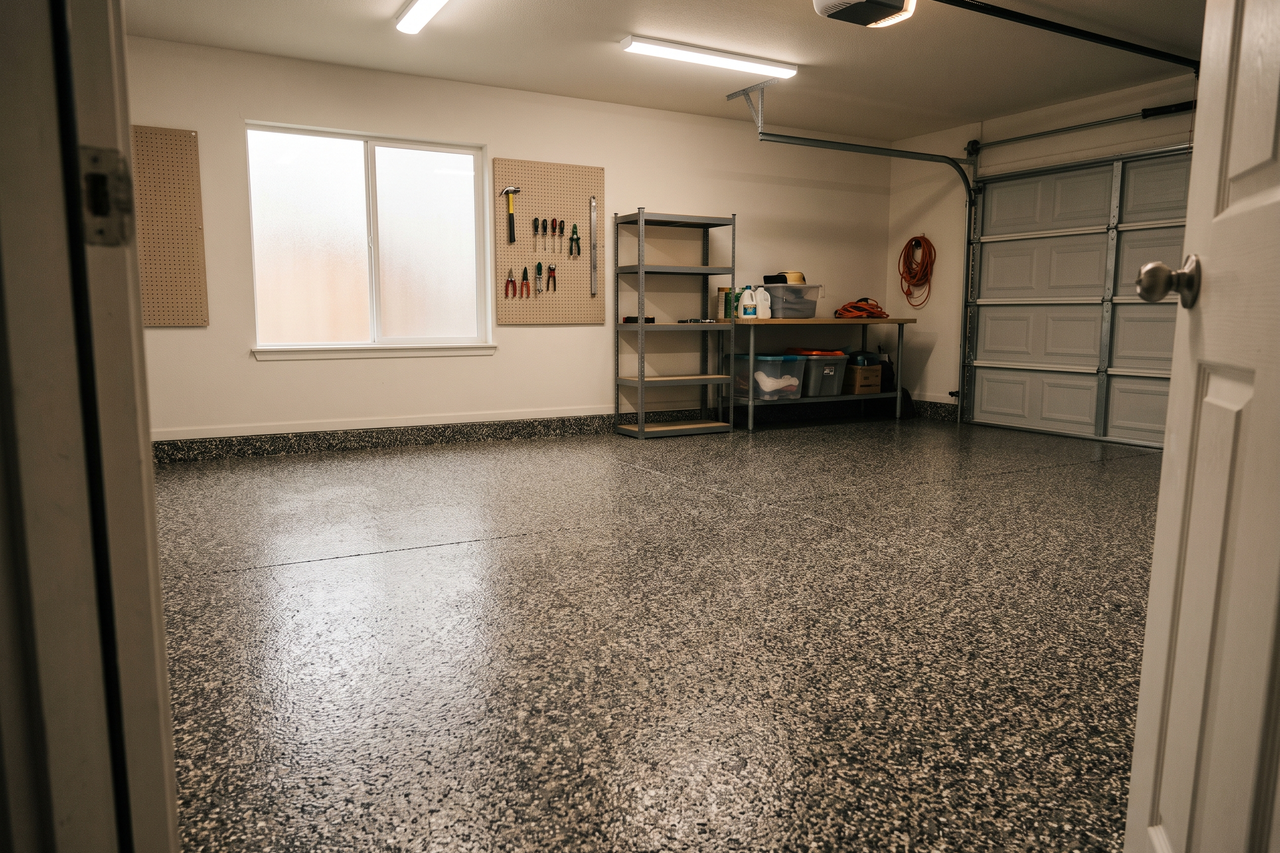
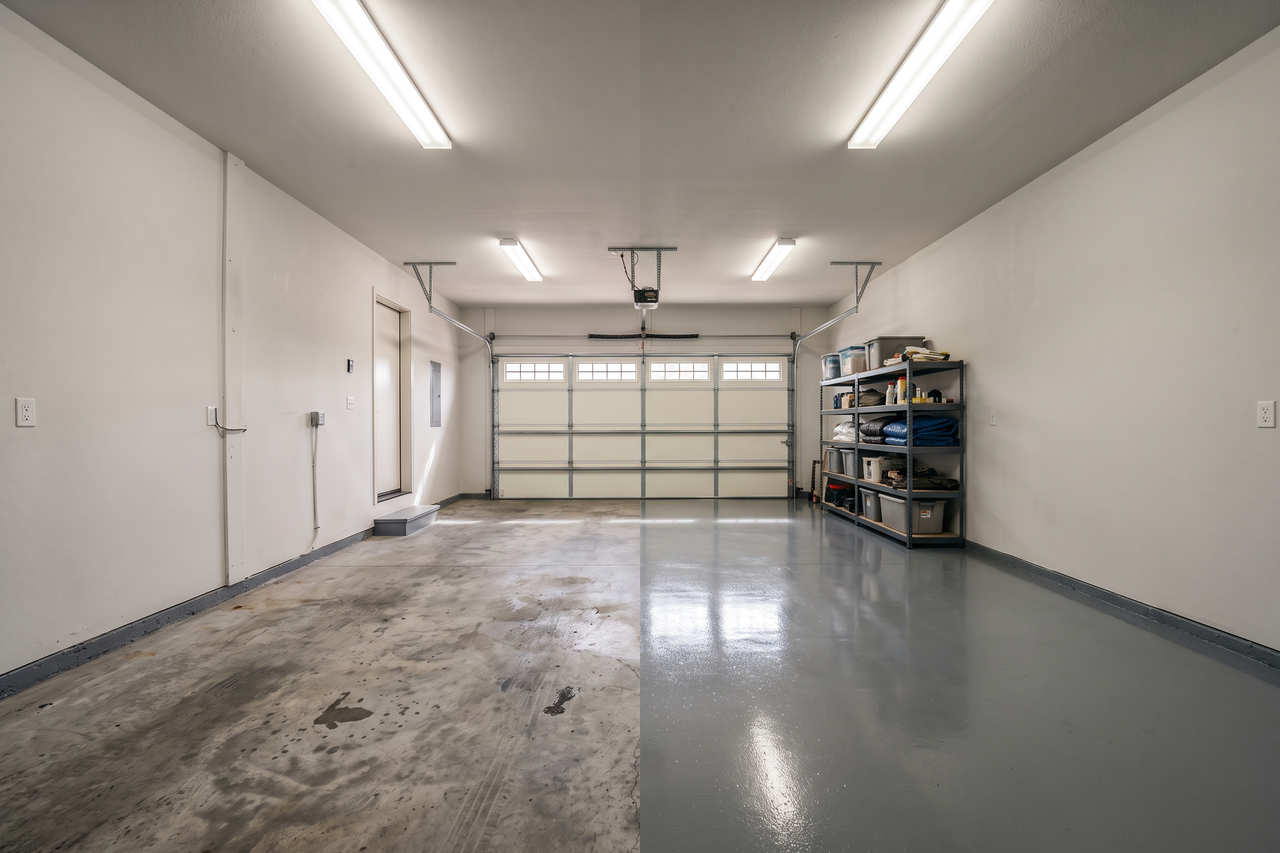
Your Concrete Shouldn’t Make a Great Space Feel Unfinished
Raw concrete absorbs spills, traps ground-in grime between the pores, and chips progressively along the edges that bear the most traffic — none of that reverses on its own. As deterioration builds, the floor becomes increasingly difficult to maintain, and it starts to define everything wrong with an otherwise functional space.
Taking action introduces questions that most owners have no reason to have worked through before: which coating product fits how this space actually operates, what conditioning the concrete may need prior to application, and what a well-run coating project actually involves.
That’s where we come in. We help you sort through the options and start the project on solid footing. From there, the flooring professional assesses the slab, recommends a system suited to the room’s actual function, and carries the work through from conditioning the concrete to applying the finished coating. The care taken in that upfront preparation work is what gives any coating its best chance at long-term durability.
The Right Floor for the Way You Use Your Space
Concrete floors come in many conditions, and the spaces above them have very different demands. The right coating depends on understanding both.
A Better Floor Is Easier Than You Think
The path from worn concrete to a finished floor is straightforward when someone who knows the work is handling it.
01
Tell Us About Your Space
Walk us through what you’re starting with — what the floor looks like now, how the room functions, and what outcome you’re working toward when the project concludes.
02
Get the Right Plan
A flooring contractor who is independent of any product line visits the concrete, identifies what preparation work the surface needs before coating can begin, and formulates a coating recommendation based on the room’s function, the slab’s current state, and the available budget.
03
Your Floor Gets Transformed
With preparation complete, the contractor applies the coating system selected for that specific floor — chosen based on the environment’s actual demands and the conditions of the slab.
A Great Floor Starts With What You Don’t See
A coating’s long-term adhesion is determined before any product touches the concrete — in the preparation work that precedes it. Coatings that fail prematurely typically reflect preparation that was cut short. The slab’s moisture level, the product selected, and the installation conditions surrounding it each factor into the outcome as well.
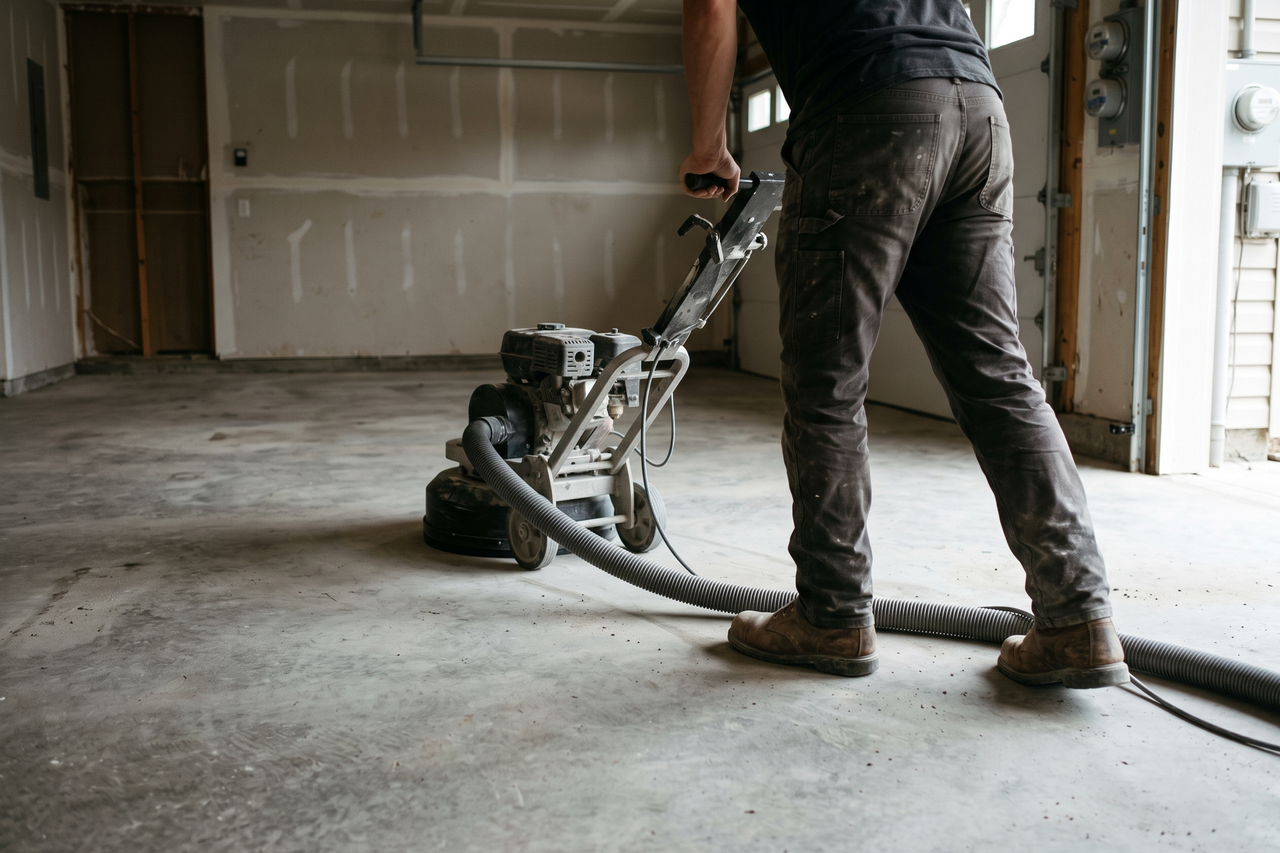
Getting the concrete ready for coating involves several distinct steps. Mechanical grinding opens the surface to the profile the coating needs; moisture readings are taken in conditions that warrant them; any surface damage gets corrected before product application begins. Completing that sequence is what positions the slab for better long-term performance.
Contractor vetting criteria include preparation approach as a primary consideration. Read more about how we work →
Make Your Space Feel Finished
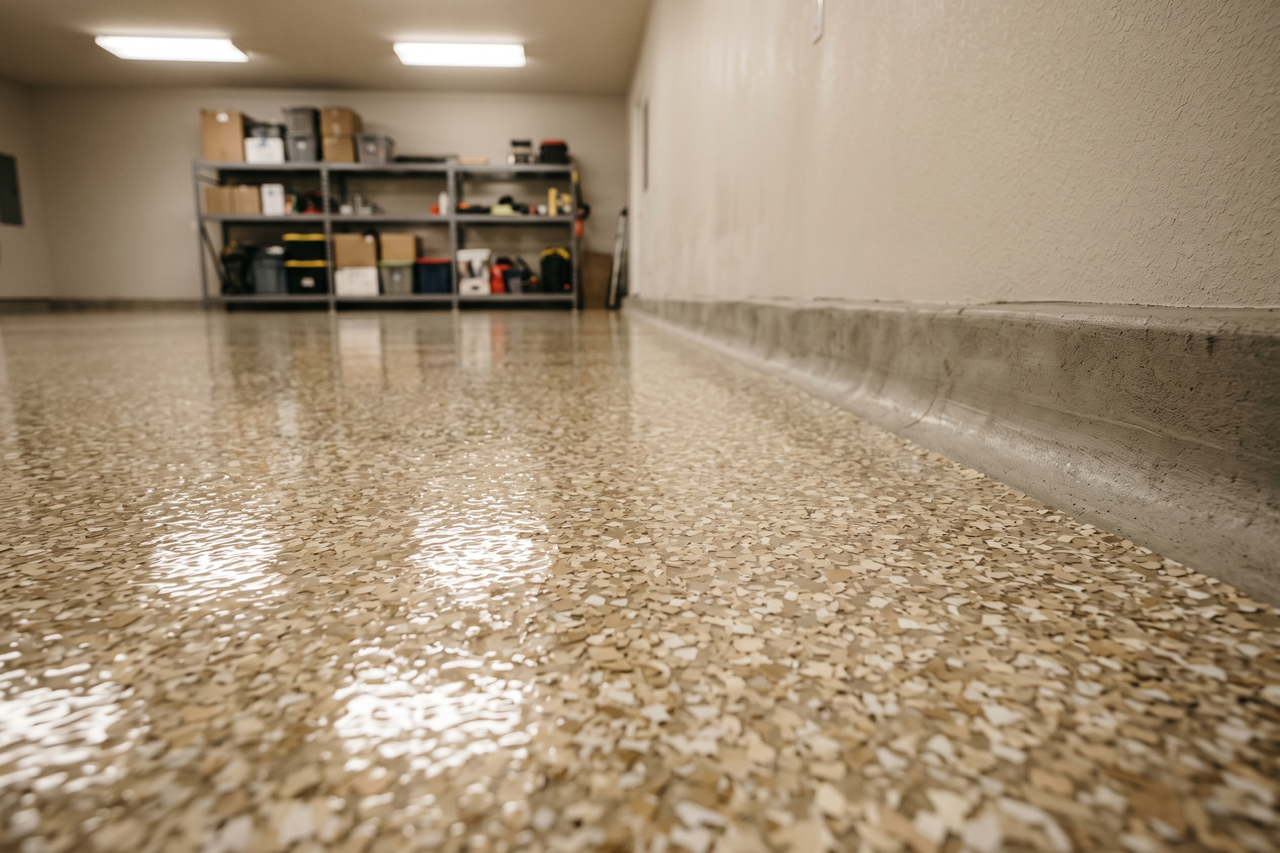
When the slab has been properly conditioned and receives a coating suited to its environment, the space changes in a way that’s hard to attribute to any single factor. What was once a dull, porous surface that collected stains and scuffed along the edges becomes purposeful — stable and even underfoot, with a finished character that bare concrete simply cannot deliver.
Surface spills no longer soak into the slab, turning what used to require real effort into a routine wipe-down. Ongoing maintenance becomes proportional to the effort available. A sealed floor redirects light across the space in a way that adds presence to the room as a whole.
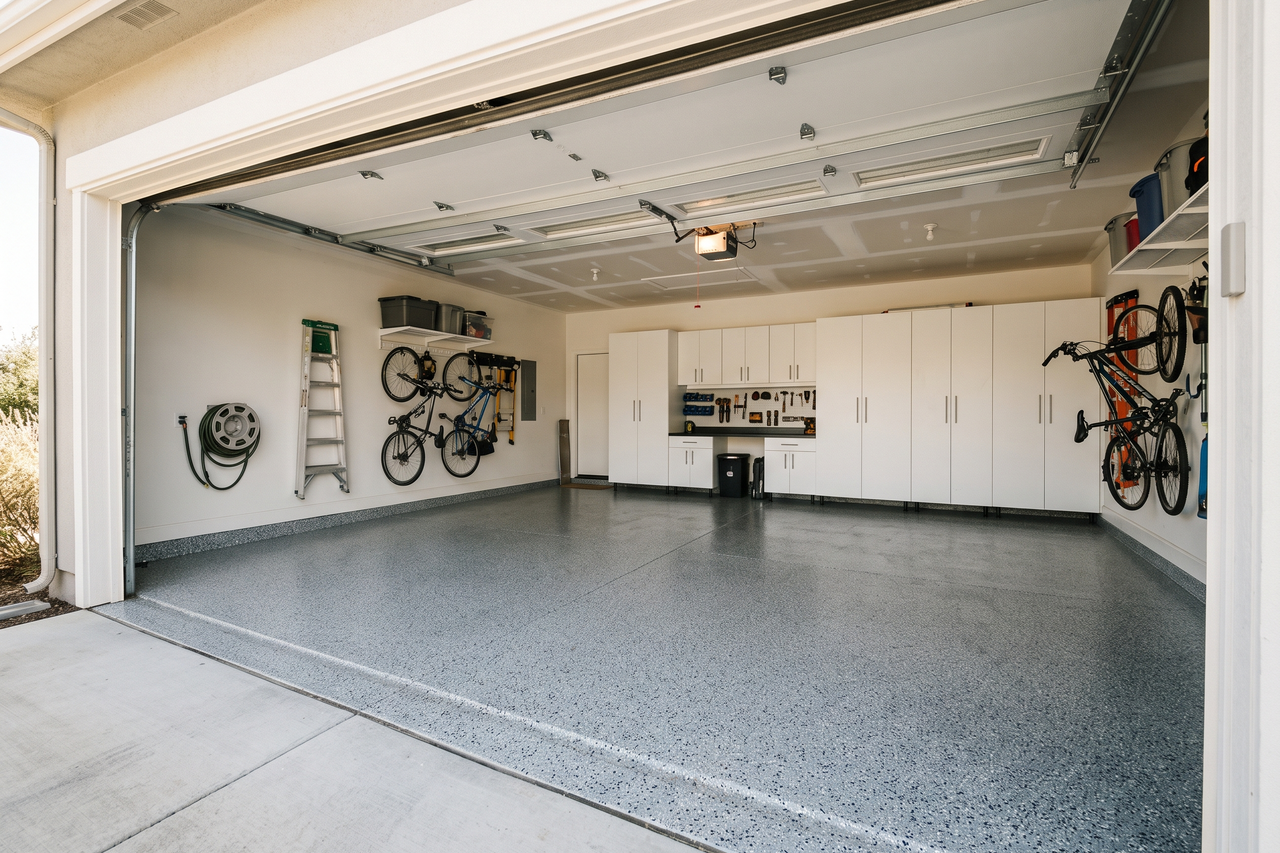
The quality of a finished floor changes how every surrounding element reads — a garage that operates as more than a parking slab, a below-grade room that belongs in the house, or a business environment where floor condition signals the care taken with everything else on the property.
Ready for a Floor You’ll Be Proud Of?
Ready to get started? Tell us about your space and what you’d like to change to request a customized quote.
Frequently Asked Questions
Which concrete surfaces are typically evaluated as candidates for a coating system?
Garage slabs, below-grade concrete, and commercial or industrial floors are the most frequent scenarios. Whether any specific surface qualifies comes down to the slab’s current condition, the product under consideration, and how the space functions on a regular basis — suitability is something the contractor determines after a direct assessment of the actual floor.
What distinguishes a polyaspartic system from an epoxy coating?
Curing speed, durability characteristics, and cost separate the two options. A polyaspartic formulation generally cures faster than many traditional epoxy systems, which changes how the project is structured. Selecting the better fit requires weighing slab conditions, ambient environment, and the intended function of the space — all of which the contractor evaluates after examining the concrete.
The slab has some oil contamination and surface cracks. Does that rule out a coating?
Typically not. Surface staining, hairline cracks, and ordinary wear get handled within the preparation process rather than treated as conditions that rule out the project. Mechanical grinding to open the concrete profile, moisture measurement where conditions require it, and correcting any damage before product application are the critical steps. What the floor specifically needs becomes clear once the contractor has assessed it in person.
After I submit the form, what’s the next step?
The details you share give the flooring professional a starting point for understanding the slab and how the space is used. An on-site look at the concrete is typically part of preparing a customized estimate for your space.